Brought to you by one of the original StepMania developers
A rhythm game rebuilt for players who feel every millisecond.
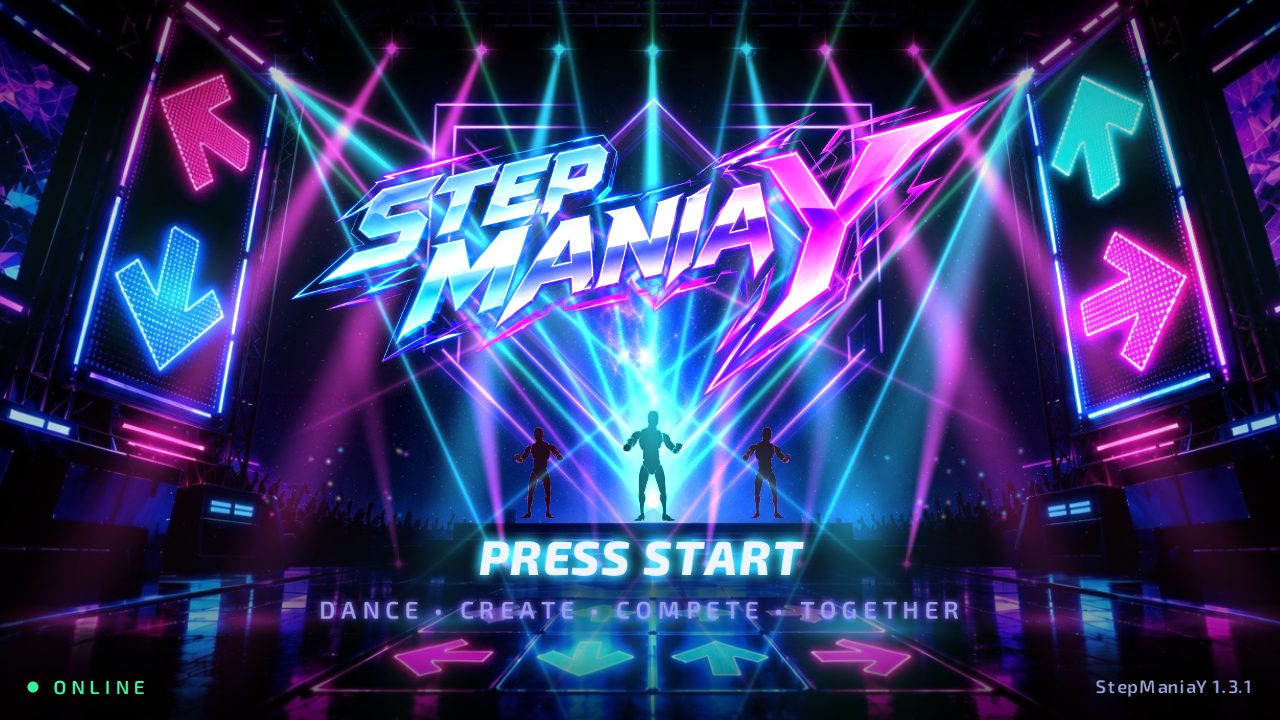
StepManiaY is a free rhythm game for dance pads, controllers and touch screens. Everything competitive players rely on is here: classic and FA+ timing windows, EX scoring, your own packs and themes. On Android and in your browser it has more than 500 free songs; everywhere, you can add your own. Underneath, we rebuilt how the game keeps time with the music, how a step becomes a judgment and how scores are checked. Then we put it on every screen you own and made it play in sync with your friends.
Windows · macOS · Linux · Android · iPhone & iPad · Apple TV · Vision Pro · Raspberry Pi 5 · Arcade cabinets · Browser
Who makes it? It's one of the original StepMania developers, back for another round. Which one is for you to guess.
Timing noise from 10 ms audio driver steps, down from 2.9 ms.
Fantastics on the jack-heavy self-test at 1.5× with every step 16 ms late. Before: 33 steps on the wrong note and 4 misses.
XInput controllers on Windows, polled every millisecond, each press with its own timestamp. Before: once a frame, ±8.3 ms at 60 Hz.
The full 3D stage on a Raspberry Pi 5 at 720p, with one late frame in about 7,600.
Why StepManiaY
Four reasons to switch
Timing you can trust
Sync that holds for the whole session, every step judged against the right note, controllers timestamped to the millisecond, and a recorder that shows you the offset of every step.
Scores that mean something
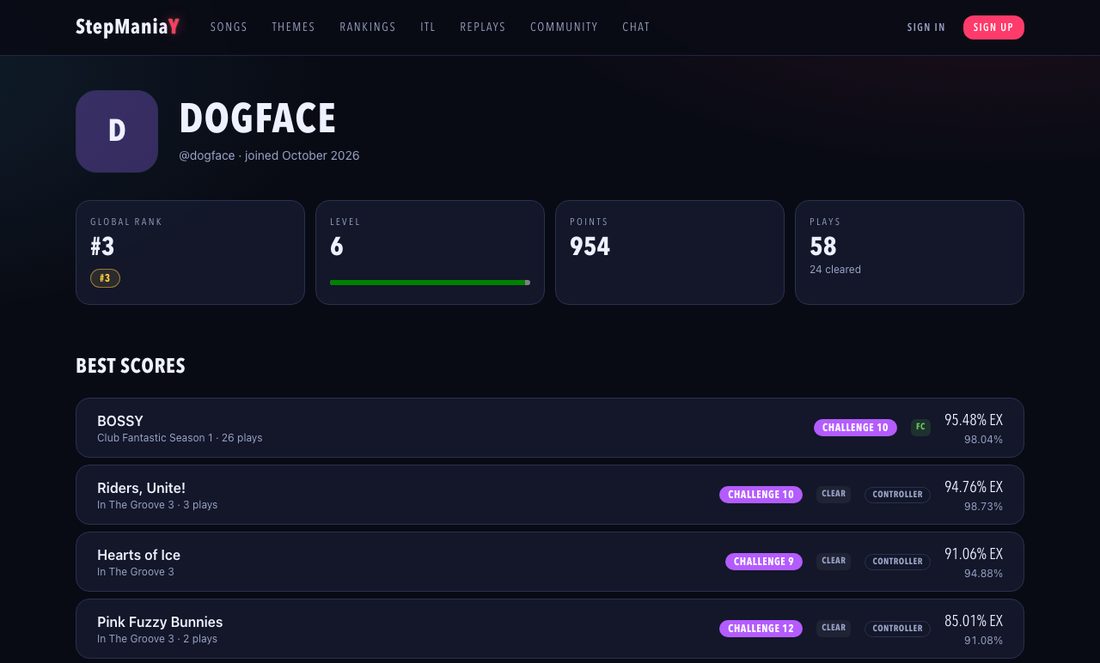
EX first. Every score is checked by the server, labelled by what you played on, and backed by a replay of every judged step you can watch on stepmaniay.com.
Play anywhere, together
Ten ways to play, from an arcade cabinet to a phone, each keeping itself up to date. Play Together keeps everyone's music within about a millisecond of one shared clock.
A stage worth playing on
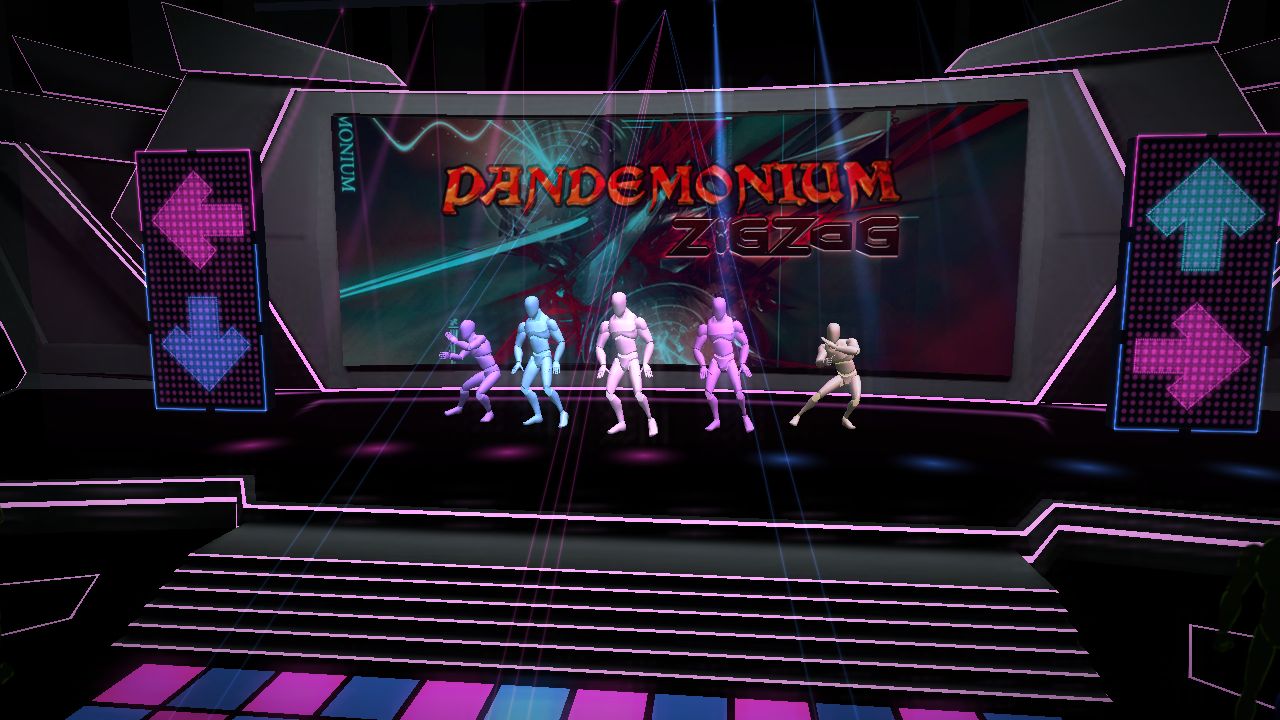
A 3D event stage with lights driven by the song and dancers on the beat, holding 60 fps even on a Raspberry Pi 5.
At a glance
What was wrong, and what we fixed
The engine StepManiaY grew from has a long history, and it carried problems that most players never saw named, only felt: sync that wandered over a long session, a fast jack that came out as an Excellent and a Miss, a controller that felt slightly loose. Here's what we found and what changed. The details, and the tests behind each fix, follow below.
| Area | Before, in the old engine | Now, in StepManiaY |
|---|---|---|
| Song position | Read raw from the operating system's audio counter and trusted all session. Every audio hiccup pushed it further from the music until a restart. | Locked to the sound card's real clock. Hiccups and drifting counters no longer move it. |
| Windows audio | Opened at 44.1 kHz on devices that mix at 48 kHz, so Windows resampled and reported estimated positions. | Opens at the device's own rate. |
| Judgment noise | 10 ms driver steps put about 2.9 ms of random error into every judgment, with an average that changed with your refresh rate. | 0.46 ms, with the same average at 60 and 144 Hz. |
| Long sessions | Counters wrapped after 12 to 25 hours, a time conversion overflowed after about 10 days of uptime, and a backwards jump froze the song position. | 64-bit counts throughout. A session can run for days. |
| Fast jacks | Steps were matched to notes in rounded rows. A slightly late step could take the next note and leave its own to miss. | Matched by time. A tie goes to the note about to be missed. |
| Long frames | A release and the next press handled in the same frame merged, and the press was lost. | The debounce goes by each event's own timestamp. |
| Windows controllers | Read once a frame with no timestamp: ±8.3 ms at 60 Hz. | XInput controllers polled every millisecond, each press with its own time. |
| Linux controllers | The driver wrote past a small buffer every time a pad or controller was opened. | Fixed on Linux PCs, cabinets and the Raspberry Pi 5. |
| Modifiers | The timer lost precision with uptime: drunk, tipsy and blink moved in 8 ms steps after a day. | Double precision. |
| Battle and Rave | Your note modifiers were applied twice, so Mirror cancelled itself. | Applied once, as in every other mode. |
| Broken files | A damaged WAV, a surround OGG or MP3, or a malformed simfile could hang the game, close it or write past its memory. | Refused or skipped, with the reason in the log. |
| Downloaded zips | Entries named with ../ unpacked outside their folder. | Every entry stays inside it. |
| Online | Online features lived in one theme's own scripts. | Built into the engine for every theme: QR sign-in, server-checked classic and EX scores, rankings, replays and input labels. |
| Playing together | Older netplay started each player when the server's go arrived, with no shared clock. | Play Together: a shared clock, up to 16 players, songs shared over the network and live standings. |
| Platforms | Windows, macOS and Linux desktops. | Also iPhone, iPad, Apple TV, Apple Vision Pro, Android, Windows on Arm, 32-bit Windows 7, the browser, a Raspberry Pi 5 image and a cabinet PC installer. |
| Updates | Download and reinstall by hand. | Every download updates itself, signed and checked. Themes and noteskins update themselves too. |
| Arcade IO | No built-in P4IO or BIO2 driver, and PIUIO needed a kernel driver. | P4IO and BIO2 drivers built in on Windows and Linux, and PIUIO over plain USB on Linux. |
For high-level players
Your sync stays where you set it
To judge a step, the game has to know exactly which moment of the song you're hearing. The old engine asked the operating system's audio counter and took its answer as the truth for the whole session. Those counters aren't tied to what the game actually played, and each of their quirks left an error that only a restart cleared. That's why sync could slide over a long session.
What was wrong
- It trusted the wrong counter. When audio briefly ran dry (a loading screen, an alt-tab), the system's counter kept running while the music didn't. From then on the game ran ahead of what you heard, and every hiccup added to it.
- Windows resampled behind the game's back. The sound device was opened at 44.1 kHz, although nearly every Windows device mixes at 48 kHz, so the positions Windows reported were a resampler's estimates.
- 10 ms steps in every judgment. DirectSound and WaveOut report positions in steps of about 10 ms. Read raw, that added about 2.9 ms of random error to every judgment, and its average shifted with your refresh rate: −5.0 ms at 60 Hz but −2.9 ms at 144 Hz, in the model.
- Counters ran out. Some wrapped after 12 to 25 hours, a Windows time conversion overflowed after about 10 days of uptime, and because the position was never allowed to go backwards, a wrap or a device reset froze it.
What StepManiaY does
- It locks to the sound card's real clock. Every report from the sound driver is treated as a measurement, and a delay-locked loop fits a line through them that follows the card's own rate. Hiccups, drifting counters and wraps no longer move the song position, and the 10 ms steps are smoothed away.
- It counts only what was actually played. Where the driver can tell, the position is the frames the game wrote minus the frames still queued, so it can never be off by more than the queue, however long you play.
- Windows audio opens at the device's own rate, usually 48 kHz, so nothing resamples behind the game.
- Your offset carries over. The new clock is calibrated to the average the old positions had. Windows has two one-time exceptions. On DirectSound or WaveOut above 60 Hz, the average may move by up to about 2 ms, because it no longer depends on the refresh rate. And if you never set a sample rate, it may move slightly as Windows stops resampling.
- 64-bit counts everywhere, so a session can run for days.
The proof
- 2.9 ms → 0.46 msJudgment noise from 10 ms driver steps, now with the same average at 60 and 144 Hz.
- 16 µsThe most the hourly average moved over a simulated week of play.
- 0.01 msLive in a browser, the sound card ran 9.5 ppm slow (34 ms an hour if left alone). The clock locked to it, with reports 0.01 ms from its line and none of 14,205 dropped.
- 83 checksAutomated tests against an exact model, including stability for any report interval and no lasting error for any fixed card rate.
The live runs so far were in the browser and the iOS simulator. A multi-hour session on real Windows hardware is the next check.
Every step judged against the right note
With perfectly timed steps, the judging math was already exact across BPM changes, stops, delays and rates. The trouble was in how a real step reached it. To find it, we built a self-test that presses the panels at exact moments through the real input path, on a 653-note chart with BPM changes, stops, 32nd jacks, streams, holds, rolls and mines. We also built a flight recorder that logs every judgment. Here's what they caught.
Fast jacks
BeforeEach step was matched to the nearest note counted in rounded rows, with ties going to the later note. In 33 ms jacks, a step 16 ms late rounded to exactly halfway, so it scored as an early hit on the next note, and its own note became a Miss.
NowNotes are compared by time, and a tie goes to the earlier note, the one about to be missed. The note is found from the same song position the step is scored from, carried to the step's own moment at the music's rate.
TestAt 1.5× with every step 16 ms late, it used to score 33 steps on the wrong note and miss 4 notes. Now all 653 are Fantastic at +16.00 ms, and at −16.00 ms when early.
Presses lost after a long frame
BeforeThe 20 ms input debounce measured time by when the game handled each event. After a long frame, a release and your next press were handled together, 0 ms apart by that measure, so the press merged into a button still held and the note was missed.
NowThe debounce goes by each event's own timestamp.
TestWith a 60 ms frame every second, it used to miss 6 notes. Now all 653 are Fantastic.
Controllers dated to the frame
BeforeOn Windows, XInput pads were read once per frame with no timestamp, so every press got the middle of the frame: ±8.3 ms at 60 Hz. For a player whose steps spread 10 ms, that turns about 1.7% of notes from Fantastic into Excellent under classic timing windows.
NowThey're polled every millisecond on the input thread, passing on only the polls that changed, each with its own time. On iPhone, iPad and Apple TV, presses carry the controller's own timestamps.
Modifiers that stuttered with uptime
BeforeThe modifiers' timer was single precision. After 3 hours of uptime it moved in 1 ms steps, and after a day in 8 ms steps, so drunk, tipsy and blink visibly stepped.
NowThe timer is double precision, and each cycle is reduced before it's used.
Check it yourself: the timing recorder
On a computer, set TimingRecorder=1 in Preferences.ini and every stage writes Logs/timing-….csv, with each step's timestamp, the note it was matched to, its offset (late is positive) and its judgment. Beside it, Logs/frames-….csv records every frame's length and every late frame. If a run felt off, you can see whether it was you or the machine.
Stability
Built for the packs you actually download
Players pull songs, packs and profiles from everywhere, and the old engine trusted every file it opened, as did some of our own new features. We went through the code that reads downloaded files and fixed what a broken or hostile one could do: hang the game, close it or write past its memory. Where we could, we reproduced each bug first and checked the fix against it. They're in every download from 1.3.1.2610240620 on.
Damaged WAV files
BeforeA WAV with a damaged chunk size (or one read as 2 GB or more) sent the game seeking backwards forever as the song loaded. A malformed ADPCM WAV promised blocks too small for their own headers, and the decoder wrote past its buffers.
NowA damaged chunk is refused, a data chunk of unknown length runs to the end of the file, and an impossible ADPCM layout is refused as invalid.
TestCrafted files that hung the old game, or that a memory checker (AddressSanitizer) caught writing past its buffers, now open cleanly or are refused.
Surround sound
BeforeThe mixer holds stereo. A 5.1 OGG, MP3 or WAV wrote past it as it played, and a keysounded song that mixed surround and stereo sounds went on using the sounds it had freed.
NowA file with more than two channels is refused as it opens, with the reason in the log, and a sound that's dropped leaves the mix.
TestThe memory checker caught the old mix reading sounds it had freed. It doesn't now.
Simfiles that stopped the game
BeforeAn empty #SPEEDS entry crashed the game during the song scan, and a DWI chart with its mode in lowercase closed it on an assert. A time signature too small for one note row a measure (1/256) hung the game when the song was played. An .ssc file listing more radar or tech values than the game has wrote past them.
NowBad entries are skipped and logged, extra values are ignored, and DWI modes are read in any case. The song loads, and so does the rest of your library.
TestThe #SPEEDS and DWI songs crashed the old song scan, and the 1/256 song hung the old game when played. The new one loads and plays all three.
Battle and Rave with your mods
BeforeBattle and Rave applied your note modifiers a second time, after every mode had already applied them. Mirror cancelled itself, Left and Right turned twice, and mods that add notes or mines added them twice.
NowThey're applied once, as in every other mode, before the mode's own turn.
TestIn Rave with Mirror on, the old build played exactly the arrows it played with no mods. Now Mirror flips them, as it does in regular play.
Downloads stay where they belong
BeforeA zip whose entries were named with ../ unpacked outside its folder, so a downloaded zip could replace other files. In Play Together, a shared song could carry Lua scripts that ran on every device that took it.
NowEvery zip entry stays inside its folder. A shared song with scripts installs only if you say yes (No is the default), and the song library checks every path and checksum it's sent.
TestOver the network, a shared song with a default.lua waited with nothing written, stayed out after No and came in whole after Yes. A song without scripts came in at once.
Linux pads, cabinets and the Pi
BeforeThe Linux controller driver wrote past a small buffer every time a pad or controller was opened, on desktops, cabinet PCs and the Raspberry Pi 5 alike. An axis numbered past the driver's table closed the game on an assert, and starting it with LANG=C closed it before it opened.
The buffer fits what the kernel writes, unknown axes are ignored, and a short LANG simply has no region.
Competitive play
Scores that mean something
Pads and cabinets
Your hardware, handled
Pads and controllers
Dance pads and adapters keep their own mappings. Controllers map themselves on Windows, macOS, Linux, Android and the browser, and on Windows, XInput dance pads are told apart from gamepads.
Arcade IO, built in
Drivers for P4IO and BIO2 boards and their pad stage (four sensors per arrow) on Windows and Linux, and PIUIO over plain USB on Linux with no kernel driver. LXIO and cabinet lights work as before. No closed, prebuilt DLLs in the play path.
The P4IO driver has been checked on real cabinets; BIO2 and PIUIO cabinet checks are next.
Machines that look after themselves
The Raspberry Pi 5 image and the cabinet PC installer boot straight into the game, full screen, and restart it if it ever closes. They check for signed updates a minute after boot and every four hours, and install security updates daily.
Play Together
Play together, actually in sync
Older netplay started each player's song when the server's go reached them, and nothing kept them together after that. StepManiaY's Play Together is built around one shared clock, so everyone in a session hears the same beat at the same moment.
One clock for everyone
Devices agree on a shared timeline. The host names a start moment 1.5 seconds ahead, and each device schedules the music to the sample, allowing for its own output latency and calibration.
It stays locked
Small drifts are trimmed by changing speed by at most 0.1%, about 1.7 cents, too little to hear. Anything over 30 ms re-syncs the music. Nobody can pause, and a fail doesn't stop your song.
Measured, not guessed
In the game's own logs, two copies on one Mac each stayed within 0.05 ms of the shared timeline, and a Raspberry Pi 5 and an iPad simulator within about 0.1 ms. Online, over a 70 ms round trip, the music held within about 1 ms of the server's timeline.
Songs come to you
If you don't have the picked song, it downloads from the picker's device over the local network, matched by the simfile itself, with no restart.
Live standings
Standings sit beside your score, updated five times a second and ranked by score, then EX. Session results show on the evaluation screen.
Room for everyone
Up to 8 devices with 2 players each, so 16 players in one session. On every platform but the browser, sessions on the same network appear by themselves, and a device can also join one by its address.
The song's chooser leads the stage. When a song is picked, everyone goes to their options together, and pressing Exit marks you ready. Once everyone is ready, the chooser starts the stage. If the room has a timer, it sends everyone in together when it runs out. The chooser's rate applies to all, gameplay waits up to 15 seconds for every device to load, and nobody else can start it early.
Online rooms on stepmaniay.com are open to testers first.
Platforms
Play it anywhere
One game, with the same scores and the same profile, on every screen you own.
Windows Download
Installers for x64 and ARM64 PCs, plus Windows 7 SP1 builds in 64-bit and 32-bit.
macOS Download
One app for Apple silicon and Intel Macs, macOS 12 or later. The first time, allow it in System Settings > Privacy & Security > Open Anyway. Also through TestFlight, now in App Store review.
Linux Download
x86_64 and ARM64, as .deb, .rpm or .tar.gz, for Ubuntu 22.04, Debian 12, Fedora 36 or newer.
Android Download
Phones, tablets and Android TV, on Android 8.0 or later, installed from the APK.
iPhone & iPad App Store
iOS 15 or later, free on the App Store. Play on the touch screen or with a controller, and add your songs with the Files app.
Apple TV App Store
tvOS 15 or later, free on the App Store. Plug in a controller and play on the big screen. It can't add songs of its own yet.
Apple Vision Pro TestFlight
visionOS 26 or later, through TestFlight. Pair a controller and play on a screen as big as the room.
Raspberry Pi 5 Download
An SD card image that boots straight into the game, with picture and sound over HDMI and Wi-Fi set from a text file on the card.
Arcade cabinet PC Download
A USB installer that turns an x86_64 PC into a dedicated machine. It erases the PC's main disk, then boots into the game.
Browser Play now
stepmaniay.com/play, with nothing to install, in current Chrome, Edge or Firefox, or Safari 17+. Sign in and the songs in your StepManiaY library are ready to play.
Every download finds its own updates, checking each new build's size, SHA-256 and signature first. Windows and the Linux .tar.gz update as the game closes. The Linux packages and Android ask you first. The Mac opens the new disk image for you to drag over, iPhone, iPad and Apple TV update through the App Store, and Vision Pro through TestFlight. Themes and noteskins update themselves when nobody is playing, often by downloading only what changed.
Presentation
A stage worth playing on
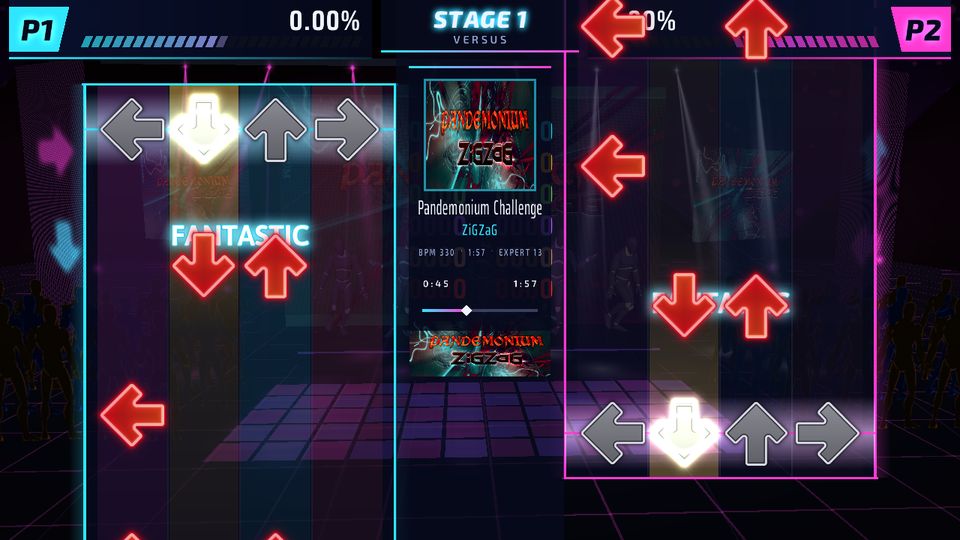
The event stage
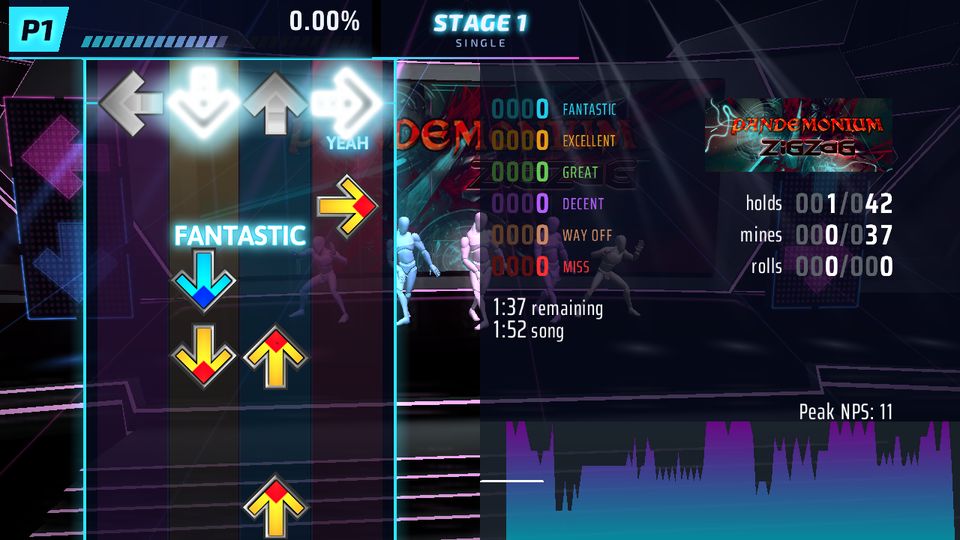
The song's art fills a curved LED screen, with moving lights, LED arrow towers and dancers who move to the chart's beat, from 47 dance loops. A light show follows the song's own audio, and the camera changes shot every 16 beats, flies in at the start and takes a bow at the end. The stage turns red when you're in danger and grey if you fail.
Full, Lite and Off settings. Phones, tablets, TVs and browsers start at Lite, computers at Full.
Your themes, and more ways to play
StepManiaY's own theme and noteskins are built in: seven noteskin looks for each game, five in techno. More themes and noteskins are downloads, and they keep themselves updated.
Beyond regular play there's Battle, against the computer or a friend, with attacks and a tug of war. There are also Marathon courses with scripted modifiers, and a Workout mode with calorie or time goals and no failing.
Switching
Switching costs you nothing
Will my songs work?
Yes. StepManiaY reads the .sm and .ssc simfiles your packs use. On a computer, copy them into its Songs folder; on iPhone and iPad, use the Files app. On Android and in your browser it also has more than 500 free songs.
Will it touch my other games?
No. StepManiaY keeps its own data folder, so it lives side by side with the simfile games you already have.
What about my profiles?
StepManiaY brings in your profiles from other simfile games on the same computer at every start. Sign in with a QR code and your profile follows you to other machines too.
Do I need an account?
No, the game plays offline. A free stepmaniay.com account adds leaderboards, rankings, replays and your profile on every machine. To sign in, you scan the QR code the game shows with your phone.
Do my scores still go to GrooveStats?
Yes. With your key in your profile, StepManiaY posts pad players' scores there too and shows the event points it sends back.
What does it cost?
Nothing. The game is free on the App Store, on Google Play and as a download.
Honest status
Where things stand
StepManiaY is in beta. Here's exactly what's live today and what's on the way (November 2026).
Live Today
- iPhone, iPad and Apple TV on the App Store, and Android on Google Play
- Downloads for Windows, macOS, Linux, Android, Raspberry Pi 5 and arcade cabinet PCs, each updating itself
- The sound clock, and every judging and stability fix on this page
- QR sign-in, server-checked scores, EX boards, rankings, replays and input labels
- Play Together on a local network, found by itself on every platform but the browser, with song sharing, live standings and the song's chooser starting the stage
- The 3D event stage, and themes and noteskins that update themselves
Beta Testers first
- Mac and Vision Pro through TestFlight, with the Mac App Store version in review
- Online Play Together rooms on stepmaniay.com
- Watching replays in the real game engine on stepmaniay.com
Next On the way
- Staying signed in on Windows and Linux between launches
- The BIO2 and PIUIO drivers on real cabinets
- A multi-hour sound clock session and an Xbox controller check on real Windows hardware
The short version
Why StepManiaY
StepManiaY keeps everything competitive players rely on and fixes what held the old engine back. You get sync that doesn't slide, judging that's right on the hardest patterns, controllers timestamped to the millisecond, scores the server checks, a replay of every judged step you can watch on stepmaniay.com, every platform you own, and friends in the same song at the same moment. And it's free.
The numbers on this page come from StepManiaY's own test suites, self-tests and logs (October 2026). StepManiaY is built on open-source code; its credits and licenses are in the game. Run the tests yourself.